

Bridge Projects
What are bridge projects?
Types of Offers
Bridge programs are a good way to introduce children and their families to institutionalized forms of child day care. They are offered as supplements to existing educational programs provided by various organizations and are tailored to the children’s and families’ life situations as well as local conditions. However, bridge projects are expressly not a substitute for regular child day care under Section 24 of SGB VIII and do not fulfill a legal entitlement. The types of programs vary from provider to provider, meaning they are tailored to local needs.
Bridge programs are implemented in various forms. They are individually tailored depending on the framework conditions and specific needs.
PARENT-CHILD ACTIVITIES
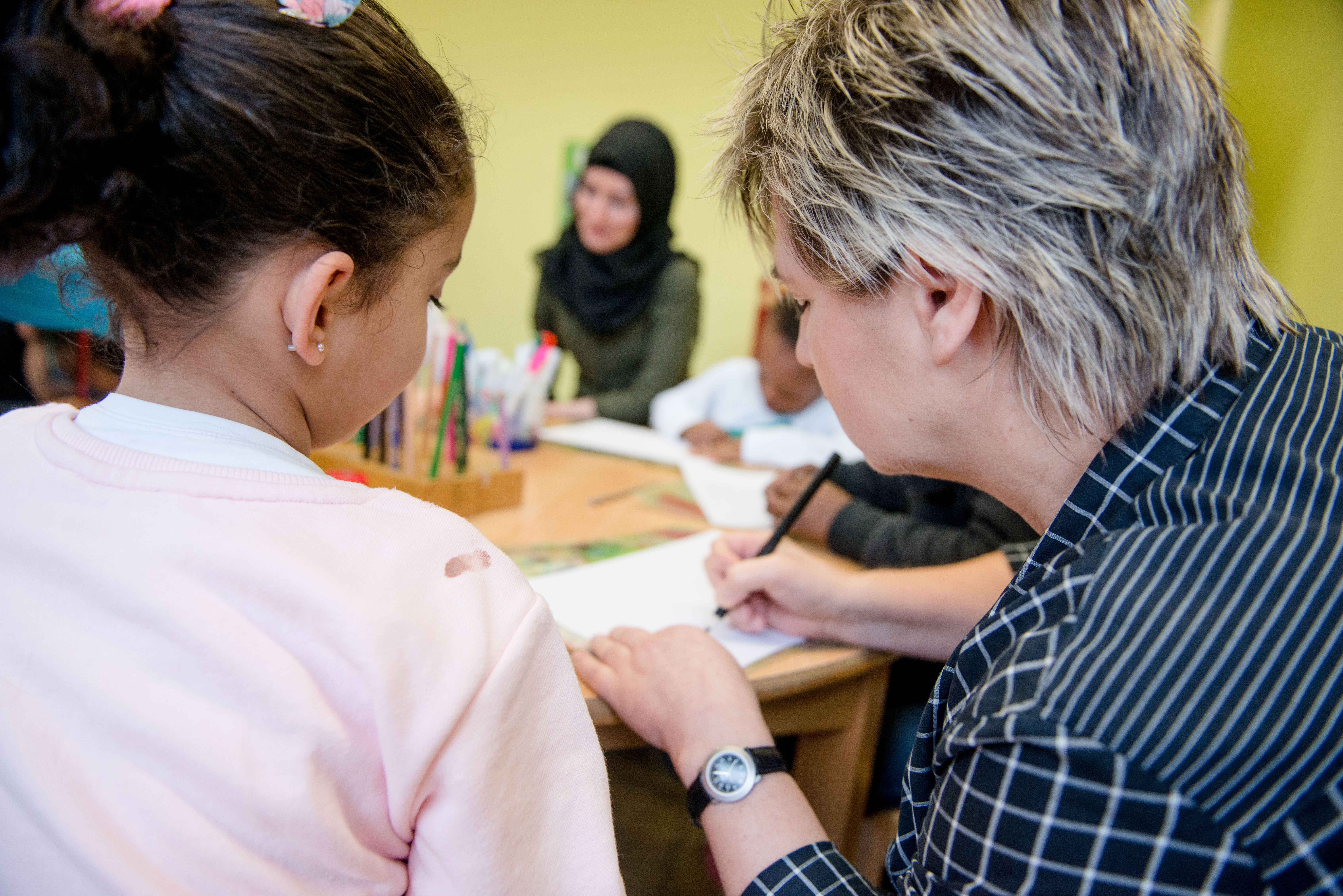
Parent-child programs usually take place once a week on the same day of the week, at the same time, and at the same location for a few hours. They are often offered for only half a year. The goal of these programs is to foster the relationship between parents and children, shared play experiences, and interaction among parents.
CHILD CARE
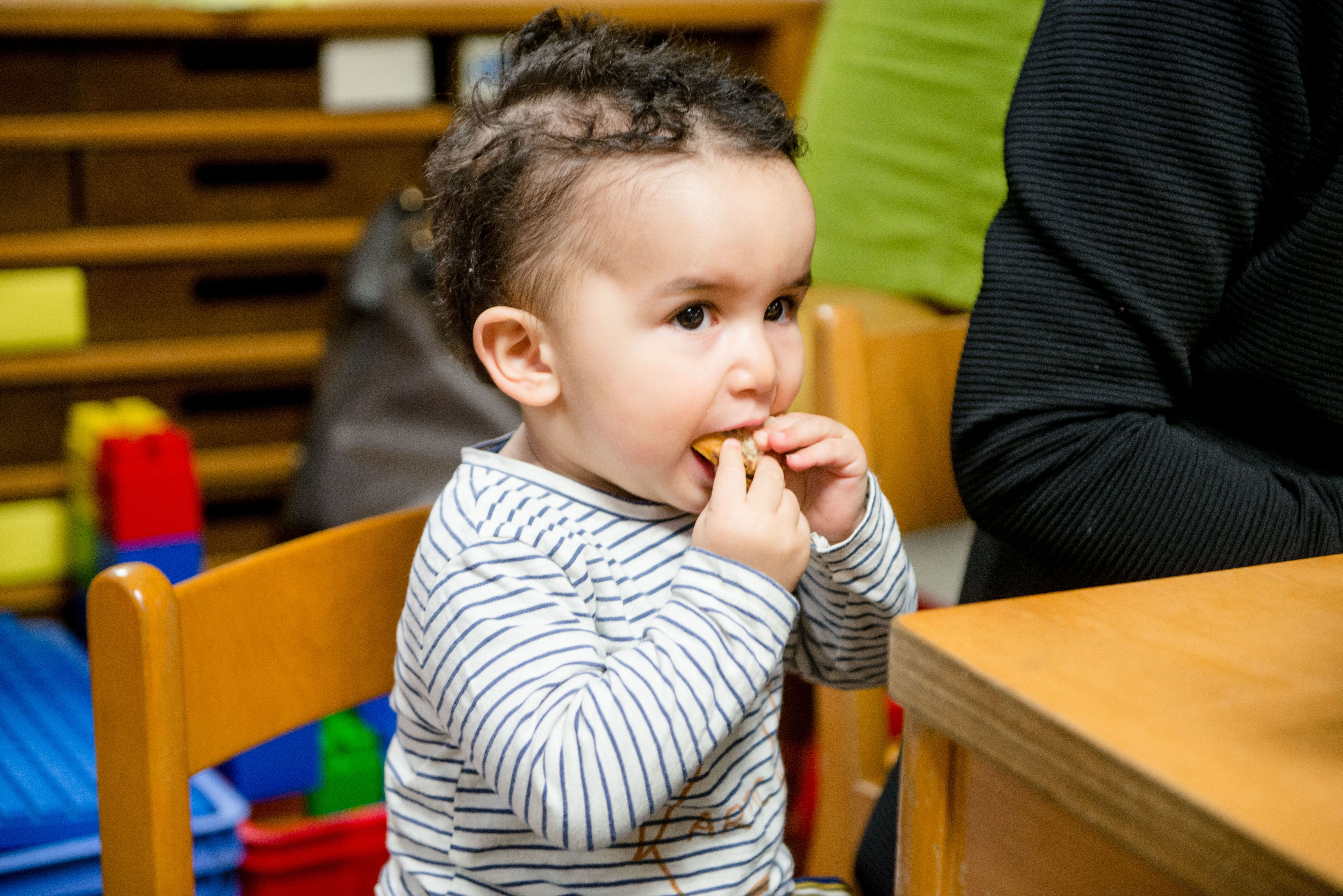
Child day care is an educational, developmental, and care service that can be provided by one or more qualified child care providers in their own home, in the home of the child’s legal guardians, or in rented space. Within the “Brückenprojekte” (Bridge Projects), it became apparent that places for children with refugee backgrounds were mostly created within existing child day care programs. In child day care, children are part of a consistent small group of just a few children between the ages of 0 and 3. The amount of time a child spends in daycare is agreed upon individually with the parents.
PLAYGROUPS
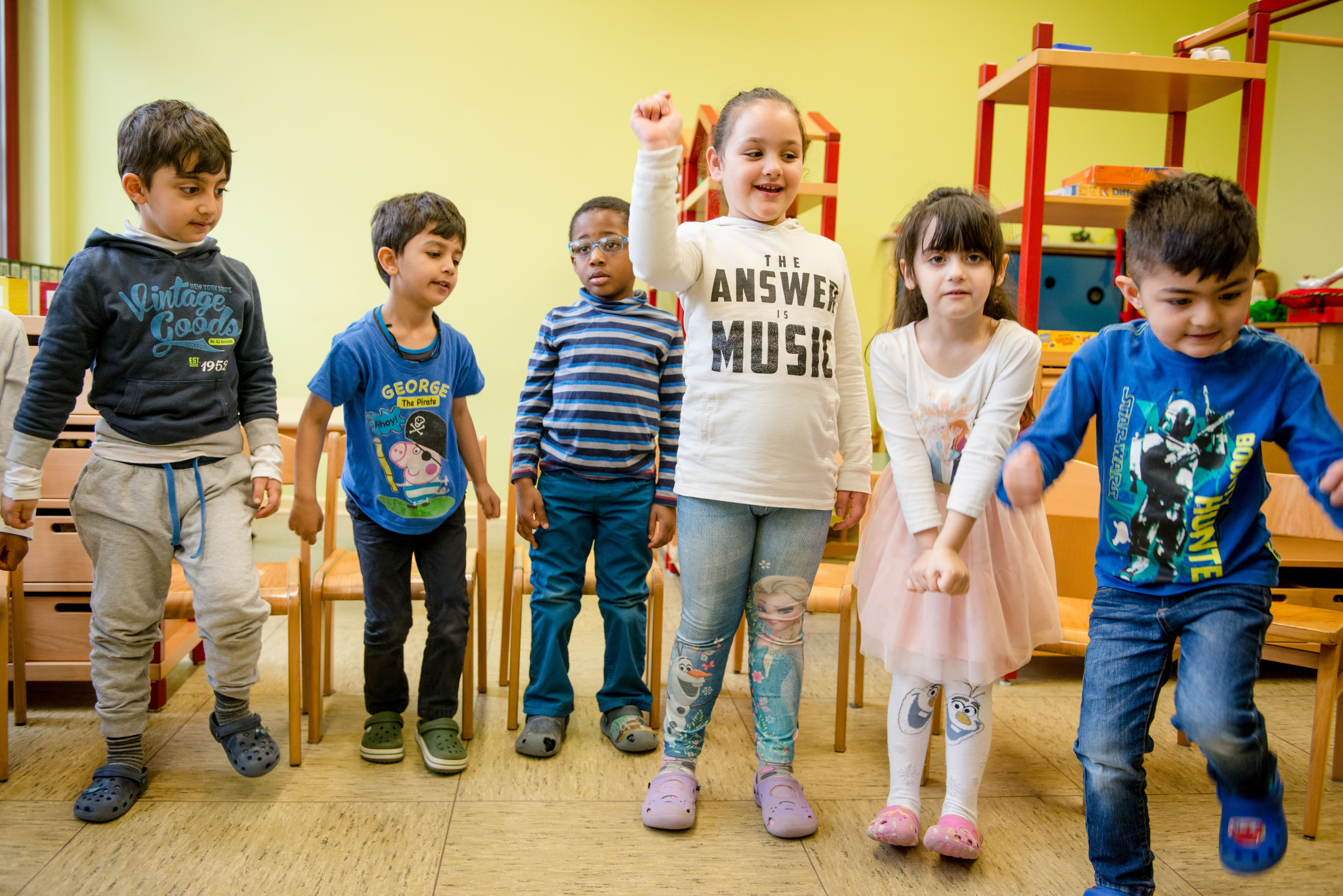
Bridge programs conducted as playgroups are primarily characterized by a relatively consistent group of children aged 3 to 6 (and in some cases, children under 3 as well). The children have the opportunity to interact and play with other children, thereby gaining important experiences. In this type of program, parents either participate in the playgroup during this time or take time off work to pick up their children after the playgroup session ends. Playgroups usually take place for only a few hours a week but occur regularly on a fixed day of the week, always at the same time and in the same location (in some cases, they may also take place several times a week or even daily).
Examples of Best Practices for bridge projects
Through needs-based services, “Brückenprojekte” aim to make it easier for children and families with refugee backgrounds to transition into their first educational institution—daycare. Based on the experiences of implemented bridge projects, recommendations have been developed for structural support and solutions to address the specific challenges. Professionals will find a summary of the results below.
Challenges in Bridge Projects and Solutions for Professionals 48.26 KB
Recommendations for Structuring Support in Bridge Projects 51.85 KB
Evaluation Results
The collaborative project “Bridging Cultures—Integration of Children with Refugee Backgrounds in Child Care Centers” was scientifically led by Prof. Dr. Birgit Leyendecker of Ruhr University Bochum and Prof. Dr. Timm Albers of the University of Paderborn (Project duration: January 2016 to December 2018). The goal of the project was to evaluate the “bridging” projects in order to classify them according to scientific standards and to develop tailored recommendations for action and practical materials. In the first phase of the project, the conceptual content, structural framework, educational processes, and cooperative arrangements within the low-threshold programs were scientifically examined. In addition, the psychosocial stresses and resources of children with refugee backgrounds were examined in depth.
The project was organized as a collaborative initiative and is characterized by an interdisciplinary mix of methods combining qualitative and quantitative approaches. Methods used included, for example, a rating scale to assess the quality of the program structure; questionnaires and interviews to assess behavioral issues and the children’s mental health, as well as the structural and orientation quality of the bridge programs; observation forms to assess the quality of interactions and pedagogical processes, and interviews to assess the quality of orientation and pedagogical practices in bridge programs. The data were collected by individuals in leadership roles, educational staff, and parents involved in bridge programs.
The majority (about 60%) of the children who participated in the “Brücken” projects were between three and six years old. Most of the children come from Syria, Iraq, and Afghanistan. The composition of the groups in the “Brücken” projects varies considerably in terms of the children’s ages and countries of origin. The children and their families were cared for by educational staff with relevant training in early childhood education. The majority of the educational staff have completed educational training, e.g., as childcare workers or early childhood educators (41.2%), or a relevant degree program, e.g., in social pedagogy or special education (33%).
With regard to the psychosocial stress experienced by children in the bridge projects, a comparison with children of the same age who have not experienced displacement shows that 3 out of 4 children with displacement experience exhibit behaviors that could indicate increased psychological stress (e.g., anxiety or attention problems). However, there are hardly any increased indications of post-traumatic stress disorder. Overall, the children are well supported in processing their experiences thanks to the special attention provided by the educational staff.
The physical and material resources within the bridge projects are very heterogeneous. Depending on the type of program, different spatial and material structural features were observed, with excellent structural features found particularly in bridge projects integrated into large daycare centers (e.g., age-appropriate furniture, individual quiet spaces for the children, materials for different educational areas, or room design). However, parent-child programs and playgroups also exhibit a high percentage of excellent and satisfactory structural features.
In summary, observations in the bridge projects show that children are provided with a learning environment that is well-equipped in terms of both space and general materials. In almost all of the bridge projects visited, children have the opportunity to engage with a wide range of materials for creative expression. Learning environments that provide cognitive stimulation in specific educational areas were observed less frequently. However, children learn and develop through a learning-stimulating environment and are stimulated by it.
In the course of the evaluation, various methodological approaches and data (e.g., questionnaires and interviews) were used to identify four key areas of action that guide the design of bridge projects: collaboration with parents, settling in (building safety and trust), structuring daily life, and supporting children’s skills. These areas of focus were confirmed in 66 bridge projects visited by the researchers (field observations). In summary, it can be noted that collaboration with parents is characterized to a large extent by a warm welcome at the start of the program and a general exchange of information.
The involvement of parents or families in the bridge projects was observed in about one-quarter of the projects. With regard to the children, staff in the bridge projects visited were overwhelmingly successful in building positive relationships with the children and responding empathetically to their needs (action area: Settling In). The structure of many programs (action area: Structuring Daily Life) is characterized by periods of free play. A structured phasing of the activities with rhythmic, recurring elements was observed to a lesser extent.
A key focus of the educational work in the area of skills development in the observed bridge projects is language education, with particular emphasis on German language proficiency and expanding the children’s vocabulary. More advanced forms of language education that stimulate cognitive development tend to take a back seat in the observed bridge projects.
When asked about the challenges they face in their daily work, the educators in the bridge projects cited, above all, dealing with emotions, trauma, and experiences of flight; language barriers; intercultural and multicultural issues; and communicating rules and boundaries. In addition, they indicated that they would like support in the form of professional development in the subject areas of “Refugee Status, Trauma, and Migration,” “Interculturality and Diversity,” and “Legal Frameworks.”
The Ministry (MKFFI), along with project partners from Ruhr University Bochum and the University of Paderborn, have responded to the research findings and jointly developed evaluation-based practical resources. To support work with families and children with refugee backgrounds, the following services and materials, among others, have been developed:
- Telephone consultation hours for educational professionals in North Rhine-Westphalia (completed)
- Parent Brochure in 12 Languages
- Activity Cards
- FAQ – Guidance for Educational Professionals
- Fact Sheets on Languages and Educational Systems in Some Countries of Origin
- Educational videos for parents on the topic of “Early Education”
- Self-study modules on practical topics of your choice
- Training materials on desired topics, prepared using methodological and didactic approaches
Submitting Proposals for Bridge Projects
Since 2015, the state of North Rhine-Westphalia has been providing budgetary funds for child care in special cases. Eligible project applications may be submitted by recognized providers of private and public youth welfare services to the state youth welfare offices via the local youth welfare offices.
The relevant funding guidelines can be found here: https://recht.nrw.de/mblnrw/2024-s1211/
Further information, FAQs, and links to the relevant application procedures can be found on the websites of the state youth welfare offices: